

Struggling with Heartburn, Reflux, Acidity, or GERD?
You don’t have to live with pain anymore. Treat your gastric
issues with Dr. Muhammad Ali Qadeer and regain your daily comfort and peaceful sleep.
Colon Cancer Screening
Can Save Lives
Trust the best interventional endoscopist in Lahore for expert colonoscopy care.
Concerned About
Your Liver Health?
- Hepatitis B or C
- Fatty liver on ultrasound
- Family history of liver cancer
- Feeling heaviness or pain in the right upper abdomen
ERCP – Advanced
Care for Biliary and
Pancreatic Diseases
Faster recovery and
proven results!
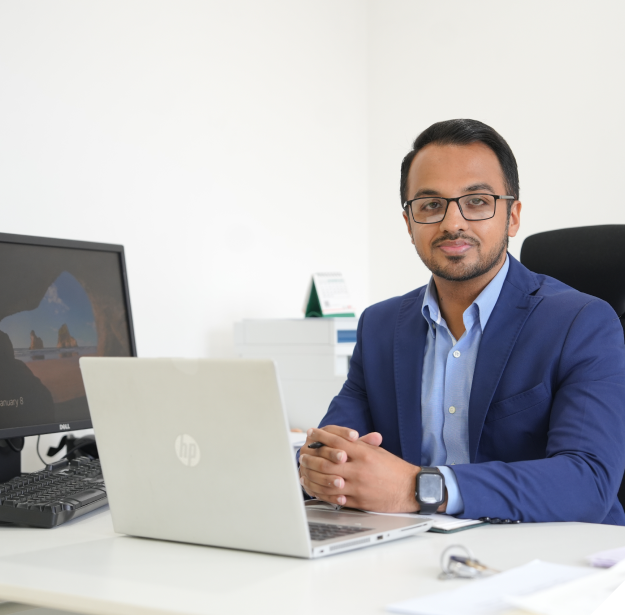
Meet Dr. Muhammad Ali Qadeer

With over 10 years of clinical experience, Dr Qadeer is committed to delivering holistic, evidence-based, and ethical medical care for patients and their families.
- A certified Gastroenterologist, Hepatologist & Interventional Endoscopist
- Currently heading the Gastroenterology Department at a tertiary care hospital
- Affiliated with the American College of Gastroenterology (MACG)
- An Executive Member of PSSLD
- Fellowship-trained in Transplant Hepatology, enabling expert care for pre- and post-liver transplant patients
With over 10 years of clinical experience, Dr Qadeer is committed to delivering holistic, evidence-based, and ethical medical care for patients and their families.
MACG
Member Amer.College
Successful
Interventional Endoscopies
PSSLD
Executive Member
Comprehensive Solutions to Your
Digestive, Liver & Pancreatic Disorders

Gastroenterology
Stomach & Intestinal Care
Gastroenterology refers to the medical evaluation and treatment of conditions affecting the stomach and intestines. Get relief and comfort from the following upper digestive issues:
- Heartburn, Acidity (GERD)
- Hiatal Hernias
- Nausea and Vomiting
- Indigestion and Bloating
- Gastric Ulcers and Painful Mouth Ulcers

Hepatology
Liver Health & Disease Management
- Liver Cirrhosis
- Viral Hepatitis (A, B, C, and E)
- Acute and Chronic Hepatitis
- Fatty Liver Disease
Pancreatology
Pancreas & Biliary Disorders Treatment
The pancreas and bile ducts support digestion and enzyme regulation. Dr. Muhammad Ali Qadeer uses advanced imaging and endoscopic techniques to diagnose and treat these complex conditions. Conditions managed by our expert include:
- Acute & Chronic Pancreatitis
- Gallstones & Biliary Stones
- Biliary Obstruction
Advanced Diagnostic and Therapeutic Endoscopy
We aim to provide high-standard healthcare to patients using state-of-the-art equipment and advanced procedures, including:
Upper GI Endoscopy (Gastroscopy)
to examine the esophagus (Oesophagoscopy), stomach, and duodenum.
Lower GI Endoscopy (Colonoscopy / Sigmoidoscopy / Proctoscopy)
to detect and treat inflammation, bleeding, or polyps.
Capsule Endoscopy/Enteroscopy
using a small camera capsule/pill camera to visualize problems in the small intestine.
Endoscopic Ultrasound (EUS)
a combination of endoscopy and ultrasound for precise imaging of digestive organs
Fibroscan
a quick and painless test, an alternative to a liver biopsy, to assess liver stiffness in fatty liver and fibrosis.
ERCP (Endoscopic Retrograde Cholangiopancreatography)
Endoscopic Dilation/ stent placement.
Endoscopic Band Ligation / Endoscopic Clipping / Sclerotherapy
Polypectomy
Polypectomy
GERD Endotherapy / Achalasia Dilation
Peg Tube Placement (Endoscopic Gastrostomy)
Cholangioscopy
Gastric Balloon
Why Choose
Dr. Muhammad Ali Qadeer?
When it comes to your digestive and liver health, experience and empathy make all the difference. Here is why patients prefer Dr. Muhammad Ali Qadeer for their health issues:
10+ Years of Expert Experience
managing complex GI and liver disorders in Pakistan.
Advanced Endoscopic Expertise
in diagnostic & Therapeuticss endoscopies, colonoscopies, & ERCP
Offers Personalized Treatment Plans
based on your disease and medical condition.
Clear communication
so patients understand their condition and treatment.
Strong Institutional Experience
across leading hospitals.
High Patient Trust
backed by hundreds of positive testimonials and successful outcomes.
Real Stories of Recovery and Relief by our Patients

Fatima R.
Happy patients
“I had been suffering from severe acid reflux for years. After just two visits with Dr. Muhammad Ali Qadeer, my condition is improving. He explained everything so clearly and made me feel comfortable.”
Zubair A.
Happy patients
“The most professional endoscopy experience I’ve had. Dr. Muhammad Ali Qadeer made me feel safe. His reassuring manner made the entire process smooth and stress-free. I’m truly grateful for his care,”
Frequently Asked Questions
When should I visit a gastroenterologist?
If you experience persistent abdominal pain, heartburn, bloating, vomiting, constipation, irregular bowel habits, blood in stools, unexplained weight loss, or jaundice, it means that something is wrong with your digestive system or liver. You should immediately consult a gastroenterologist.
What happens during an endoscopy?
Endoscopy is a safe and minimally invasive procedure that uses a flexible tube with a camera to view your digestive tract without surgery. It is used to diagnose and treat different digestive issues, such as ulcers, reflux disease, infections, and bleeding, and in some cases, treatment can be performed during the same procedure.
Is liver disease reversible?
Some liver conditions, such as early-stage hepatitis or fatty liver disease, can be managed and reversed easily if detected early. That is why proper diagnosis on time and treatment from an expert are necessary to keep yourself away from complications. Advanced liver disease may not be reversible, but timely expert care can slow progression and prevent complications.
Do I need a referral to see Dr. Muhammad Ali Qadeer?
No referral is required. You can directly book an appointment with Dr. Muhammad Ali Qadeer for consultation, investigation, or follow-up care.
How can I prepare for my first visit?
Bring any previous reports or test results on your first visit. Be ready to discuss your symptoms and medical history for an accurate evaluation, diagnosis, and treatment.
Is colonoscopy painful or unsafe?
Colonoscopy is generally not painful and is performed under sedation for patient comfort. When done by an experienced gastroenterologist, it is a very safe procedure that plays a vital role in the early detection of colorectal cancer.
Does Dr. Muhammad Ali Qadeer perform ERCP?
Yes. Dr. Muhammad Ali Qadeer is an expert interventional endoscopist and performs ERCP for the diagnosis and treatment of bile duct and pancreatic diseases, including stones and obstructions.
How often should colon cancer screening be done?
For average-risk individuals, screening is recommended starting at age 45. Patients with a family history or symptoms may require earlier screening, as advised by the doctor.