

Expert Gastroenterologist
in Lahore for Digestive Disorders
Advanced, evidence-based care to protect your digestive system from
- Acid Reflux, Heartburn & GERD
- IBS, Constipation & Chronic Diarrhea
- Inflammatory bowel diseases (ulcerative colitis & Crohn’s disease)
- Stomach Ulcers & Digestive Pain
- Gastrointestinal Bleeding
Comprehensive Endoscopy and Colonoscopy Services to provide Compassionate Digestive Care for all patients.

Dr Muhammad Ali Qadeer
Consultant Gastroenterologist &
Interventional Endoscopist Lahore
Dr. Muhammad Ali Qadeer provides advanced interventional endoscopy services for the diagnosis and management of gastrointestinal, hepatobiliary, and pancreatic conditions. His expertise includes both diagnostic and therapeutic procedures, performed using minimally invasive techniques with an emphasis on patient safety, accuracy, and clinical effectiveness.
Interventional procedures are carried out with an emphasis on patient safety, procedural accuracy, and clinical appropriateness. Services include diagnostic and therapeutic endoscopic interventions for gastrointestinal bleeding, portal hypertension–related conditions, pancreaticobiliary disorders, and obesity-related endoscopic therapies.
Advanced Interventional Endoscopy Procedures We Offer
Common myths:
- “EGD is painful” – you will only feel minor discomfort because the procedure is performed under sedation to avoid pain.
- “It’s only for serious disease” – EGD is also used for early detection and screening of upper GI tract diseases. Early detection prevents future complications.
- “Recovery takes days.” – Endoscopy is a minimally invasive procedure, and you will recover within hours.
Upper GI Endoscopy (EGD / Gastroscopy)
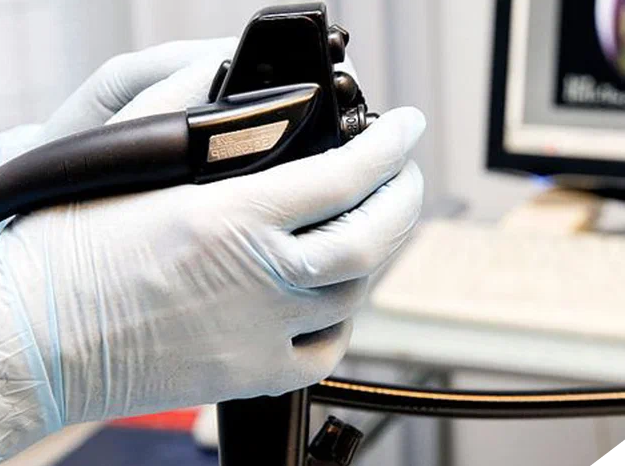
It is a quick and minimally invasive test performed by a specialist to examine the esophagus, stomach, and duodenum (the upper part of the small intestine). It helps in the accurate diagnosis and treatment of ulcers, gastritis, acid reflux, and early cancers.
Learn what to expect
Why is it done? Doctors perform EGD (Esophagogastroduodenoscopy), to investigate heartburn, nausea, vomiting, bleeding, or swallowing difficulties. This procedure helps to visualize the upper GI tract, including the esophagus, stomach, and duodenum. The same procedure is also used to perform treatments such as polyp removal, bleeding control, or dilation of narrowed areas.
How it’s done: A thin, flexible tube with a camera (endoscope) is gently passed through the mouth while the patient is sedated. It allows the gastroenterologist to perform treatment precisely, minimising the need for major surgery.
What to expect: The procedure usually takes 10-20 minutes, and patients may experience mild throat discomfort and bloating after the procedure. However, patients can resume most activities within a few hours. The procedure is quick and risk-free when performed by a specialist.
Preparation: Patients are typically instructed to fast for 6–8 hours before the procedure and avoid certain medications as advised by the gastroenterologist.
Variceal Band Ligation
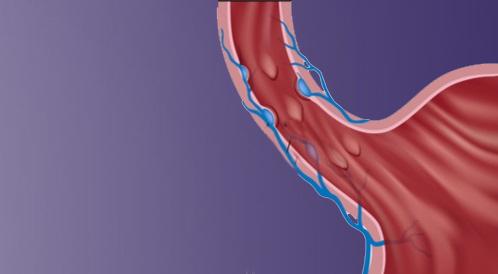
It is used to treat enlarged veins in the lower part of the esophagus (esophageal varices). It is a life-saving procedure for patients with liver cirrhosis. During this procedure, small rubber bands seal the enlarged veins to stop/prevent bleeding.
Bleeding Ulcer Management
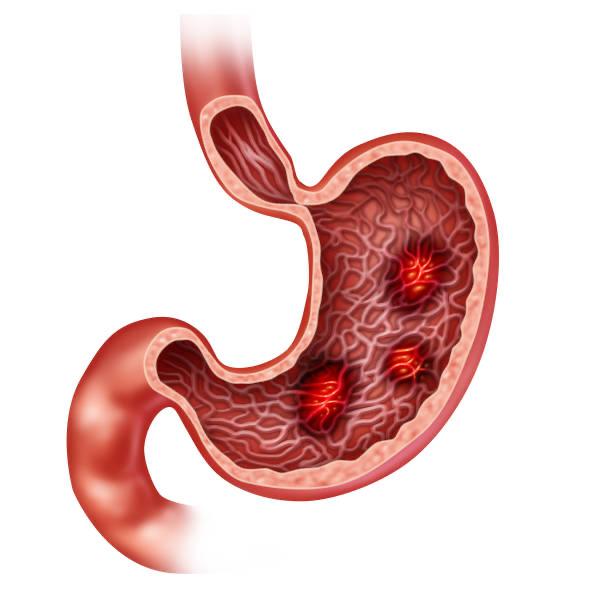
If there is internal bleeding from the stomach or duodenal ulcers, then it is controlled using endoscopic procedures. Advanced techniques are also used, such as injection therapy, thermal coagulation, or clipping. It immediately controls bleeding and reduces the need for surgery.
Gastric Ballooning
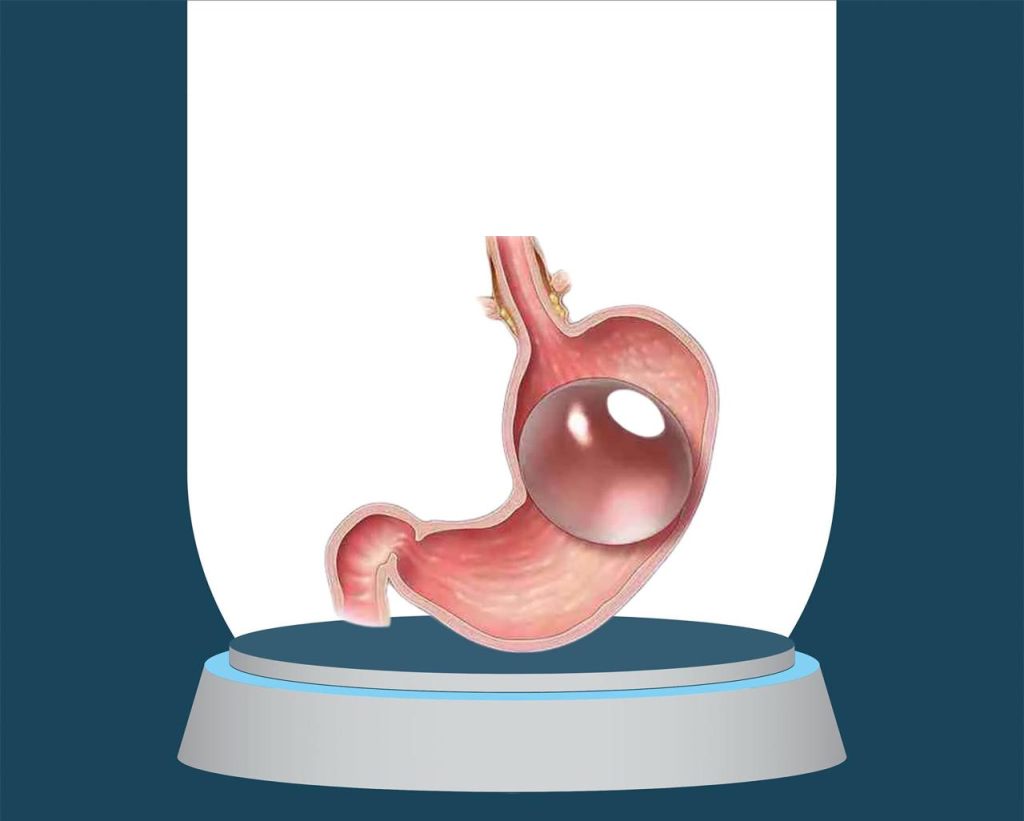
A non-surgical procedure where a soft balloon is placed in the stomach (swallowable or endoscopic). This procedure reduces stomach volume and helps the patient to control appetite and promote sustainable weight loss.
Flexible Sigmoidoscopy
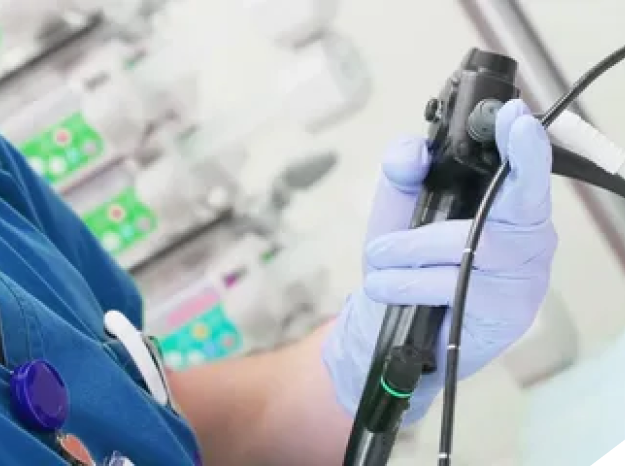
A short endoscopic procedure to examine the rectum and lower colon. It helps diagnose and treat early colorectal conditions, including polyps, inflammation, and bleeding.
Colonoscopy
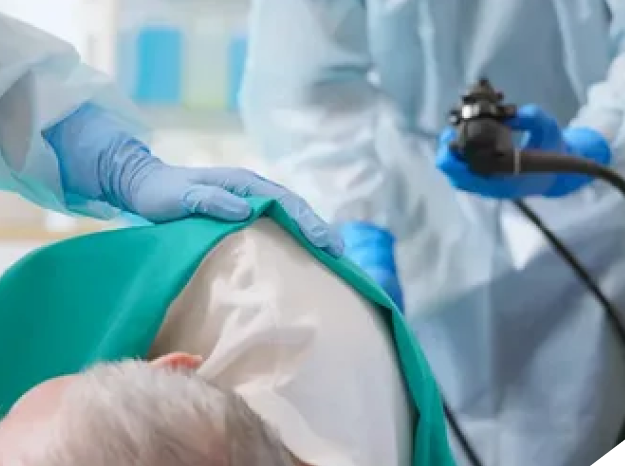
It is a procedure that is used to examine the entire colon. It is a gold standard for colon health and cancer prevention. This minimally invasive procedure is also used to diagnose inflammatory bowel diseases, and it helps in the evaluation of conditions such as chronic diarrhoea and bleeding.
Who Should Get a Colonoscopy?
Pakistan has an increased incidence of colon cancer, and early detection can help the doctor to treat it effectively. You should get a Colonoscopy if you:
- Are 45 years or older (Cancer screening)
- Presence of blood in stool
- Have a family history of colon or rectal cancer.
- Experience chronic diarrhea or constipation.
- Have conditions like inflammatory bowel disease (IBD), Crohn’s
How to Prepare for a Colonoscopy?
Your doctor will instruct you about diet adjustments and medications to help during the procedure. A low-fiber diet is recommended for a few days before the procedure. Moreover, only clear liquids (broth, black tea/coffee, clear juice, jell-o) should be taken the day before a colonoscopy. You will use medications prescribed by the doctor that will clean your bowel.
ERCP (Endoscopic Retrograde
Cholangiopancreatography)
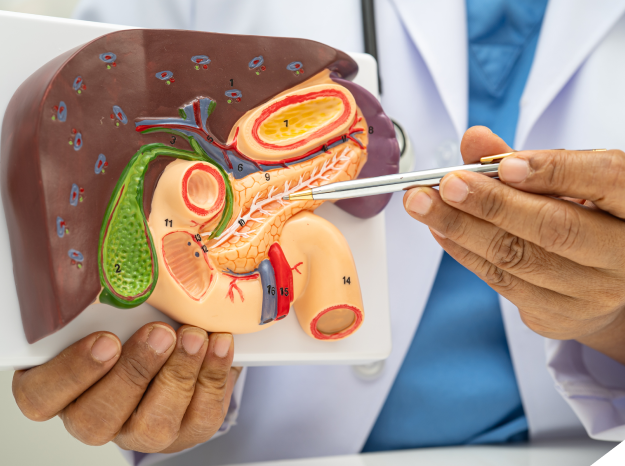
An advanced procedure to diagnose and treat bile duct and pancreatic conditions, including stones, strictures, and pancreatic duct obstructions, using minimally invasive endoscopic techniques
Learn more about ERCP
What ERCP Is For (Indications): ERCP is a procedure that diagnoses and treats conditions affecting the bile ducts and pancreatic ducts. These conditions include bile duct stones, narrowing of the ducts (strictures), infection (cholangitis), & blockages in the pancreatic duct.
How does the Procedure Works?: A flexible endoscope is passed through the mouth into the duodenum (the first part of the small intestine). A small catheter is used to inject contrast dye into the bile and pancreatic ducts. X-ray imaging allows the doctor to diagnose and treat conditions, such as removing stones, placing stents, or taking tissue samples.
What to Expect During the Procedure? The procedure is typically performed while the patient is under anesthesia. After the procedure, patients may feel minor throat discomfort or bloating. Most return to normal activities within 24 hours, with specific dietary and care instructions provided.
Potential Risks: ERCP is generally safe but carries small risks, including pancreatitis, bleeding, infection, or perforation. Careful evaluation, expert technique, and post-procedure monitoring minimize these risks.
PEG Tube Placement
(Percutaneous Endoscopic Gastrostomy)
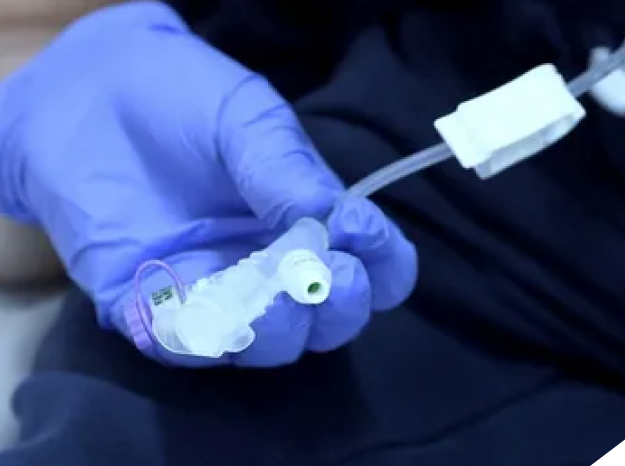
This procedure is used for patients who cannot take food orally. It involves placing a feeding tube gently into the stomach through the abdomen. Patients having neurological disorders, swallowing difficulties, or chronic illnesses that require long-term enteral feeding are perfect for this procedure.
Frequently Asked Questions
What is interventional endoscopy?
Interventional endoscopy involves advanced endoscopic procedures that not only diagnose but also treat gastrointestinal, liver, biliary, and pancreatic disorders without the need for open surgery.
Are these procedures safe?
Yes. All endoscopic procedures are safe and performed by specialists. They are minimally invasive and designed for patient comfort and safety.
How do I prepare for an endoscopic procedure?
Preparation depends on the procedure, and your specialist will guide you properly about it. Typically, you need to avoid eating and drinking few hours before the procedure.
Is recovery long after these procedures?
No, you will recover quickly from an endoscopic procedure as compared to open surgery. Most patients return to their normal activities within 1 day, depending on the procedure. Gastric balloon patients follow a specific diet and exercise as guided by the specialist.
Can endoscopy help with weight loss?
Yes. Procedures like gastric ballooning are minimally invasive methods that help in sustainable weight loss if a healthy diet is maintained and an exercise routine is followed.