

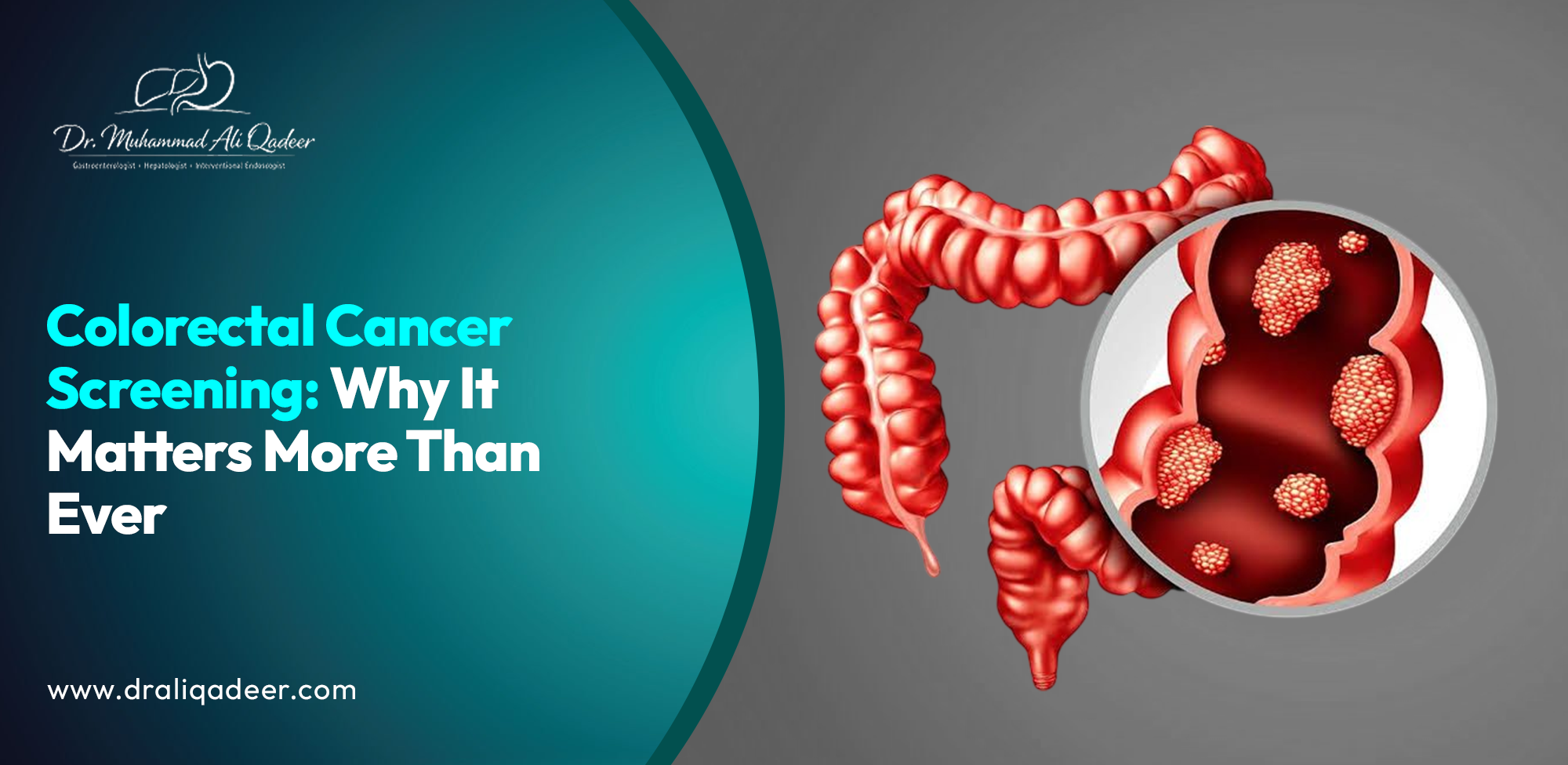
Colorectal cancer (CRC) is a cancer that develops in the large intestine (colon) or rectum. It usually starts as small, non-cancerous growths called polyps, which slowly grow over years and may eventually turn into cancer if not detected and removed early.
The important thing to know?
Colorectal cancer is preventable and highly treatable when detected early.
Rising Prevalence in Pakistan
Over the past decade, colorectal cancer has been steadily increasing in Pakistan. It is now among the more common cancers affecting both men and women.
Contributing factors include:
- Changing dietary habits (high processed food, low fiber intake)
- Sedentary lifestyle
- Increasing obesity
- Smoking
- Delayed medical consultation
- Lack of routine screening
Many patients in Pakistan present at a late stage, mainly because early disease often causes no symptoms. This is why screening is so important.
What Are the Common Symptoms?
Early colorectal cancer may cause no symptoms at all, which is why screening is crucial.
When symptoms do appear, they may include:
- Blood in stool (bright red or dark)
- Persistent change in bowel habits (diarrhea or constipation)
- Narrow or ribbon-like stools
- Unexplained weight loss
- Persistent abdominal discomfort
- Feeling that the bowel does not empty completely
- Unexplained anemia (low hemoglobin), especially in older adults
- Weakness and fatigue
Any of these symptoms lasting more than 2–3 weeks should be evaluated.
Who Is at Risk?
You may be at higher risk if you:
- Are 45 years or older
- Have a family history of colorectal cancer or polyps
- Have inflammatory bowel disease (ulcerative colitis or Crohn’s disease)
- Have a personal history of polyps
- Have diabetes or obesity
- Smoke or consume excessive red/processed meat
- Lead a sedentary lifestyle
If you have a first-degree relative with colorectal cancer, screening may need to start earlier.
How Is Colorectal Cancer Diagnosed?
Several tests help detect colorectal cancer or precancerous polyps:
-
Stool-Based Tests
- Fecal occult blood test (FOBT)
- Fecal immunochemical test (FIT)
These detect hidden blood in the stool but do not diagnose cancer directly.
-
Colonoscopy (Gold Standard)
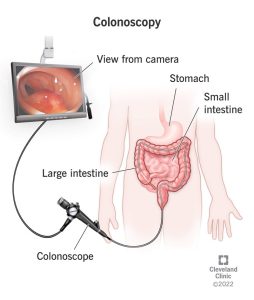
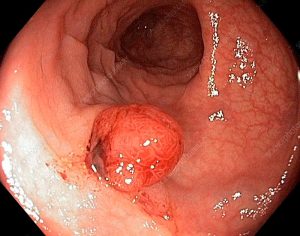
Colonoscopy is the most accurate and reliable test. It allows:
- Direct visualization of the entire colon
- Detection of small polyps
- Immediate removal of polyps
- Biopsy of suspicious lesions
This makes colonoscopy both a diagnostic and preventive procedure.
When Should You Get Screened?
For average-risk individuals:
- Start screening at age 45
For higher-risk individuals:
- Screening may begin earlier, depending on family history or medical conditions.
If your colonoscopy is normal, it is usually repeated every 10 years (unless otherwise advised).
Can Colorectal Cancer Be Prevented?
Yes — in many cases.
Prevention strategies include:
- Regular screening colonoscopy
- High-fiber diet (fruits, vegetables, whole grains)
- Reducing red and processed meat
- Regular physical activity
- Maintaining healthy weight
- Avoiding smoking
Removing polyps during colonoscopy significantly reduces the risk of developing cancer.
Why Screening Saves Lives
Colorectal cancer often develops slowly over 8–10 years. This gives us a large window of opportunity to detect and remove precancerous polyps before cancer develops.
Screening is not just about detecting cancer —
it is about preventing it.
If you are 45 years or older, or have a family history of colorectal cancer, consider discussing screening with your doctor.
Early detection can make all the difference.